
The Most Common Clutter Traps I See in Kingston — And How I Fix Them
When a Kingston homeowner tells me their house feels cluttered, overwhelmed, or constantly out of control, the issue is almost never random. Clutter follows patterns. It forms in predictable ways, in predictable places, for predictable reasons. And once you understand those reasons, clutter becomes far easier to prevent and resolve.
Over the years, working inside homes across Kingston, I’ve seen the same clutter traps appear again and again. These traps don’t exist because people are careless or disorganized — they exist because homes evolve, routines change, storage stays the same, and life gets busy.
Most people try to fight clutter by cleaning more, organizing harder, or buying new storage. But unless the underlying trap is addressed, clutter always returns.
In this blog, I’m going to break down the most common clutter traps I see in Kingston homes, explain why they happen, and walk you through exactly how I fix them in a way that actually lasts.
Clutter Trap #1: Entryways That Absorb Everything
The first and most common clutter trap in Kingston homes is the entryway — or wherever people enter and exit the house most often.
This space usually becomes overwhelmed because:
Shoes pile up without limits
Bags are dropped with no designated home
Coats accumulate from multiple seasons
Mail lands wherever there’s space
Items from other rooms get “parked” temporarily and never move again
Because the entryway is used constantly, even small amounts of clutter multiply quickly. When this area is messy, homeowners feel stressed the moment they walk through the door.
How I Fix It
I never try to eliminate clutter here — I contain it.
I create:
Clear shoe limits based on daily use
Simple hooks instead of complicated hangers
A dedicated spot for bags
One controlled landing space for mail and papers
A reset routine that takes under two minutes
Once the entryway has boundaries, it stops absorbing the entire house’s clutter.
Clutter Trap #2: Kitchen Counters Doing Too Many Jobs
In Kingston homes, kitchen counters often become the default landing zone for everything — not just food prep.
Counters collect:
Mail and paperwork
School items
Small appliances
Chargers
Random household items
Groceries waiting to be put away
When counters are cluttered, the entire home feels chaotic, even if other rooms are fine.
How I Fix It
I start by deciding what the kitchen counters are for — and what they are not for.
Then I:
Remove anything that doesn’t belong to daily kitchen use
Create alternate homes for non-kitchen items
Limit countertop appliances to essentials
Build nearby drop zones so items don’t return
Establish a simple daily reset habit
Clear counters restore calm immediately and make the whole home feel more manageable.
Clutter Trap #3: Flat Surfaces That Invite Piles
Flat surfaces are magnets for clutter. In Kingston homes, I often see piles forming on:
Dining tables
Coffee tables
Sideboards
Dressers
Bathroom counters
Chairs
These surfaces quietly collect items because they’re easy and visible — but once clutter builds, it feels impossible to clear.
How I Fix It
I reduce the availability of flat surfaces as dumping zones.
I do this by:
Limiting what permanently lives on the surface
Creating nearby containment for loose items
Reducing visual clutter so piles stand out immediately
Teaching quick daily surface resets
When surfaces are intentionally styled and lightly used, people naturally hesitate to clutter them again.
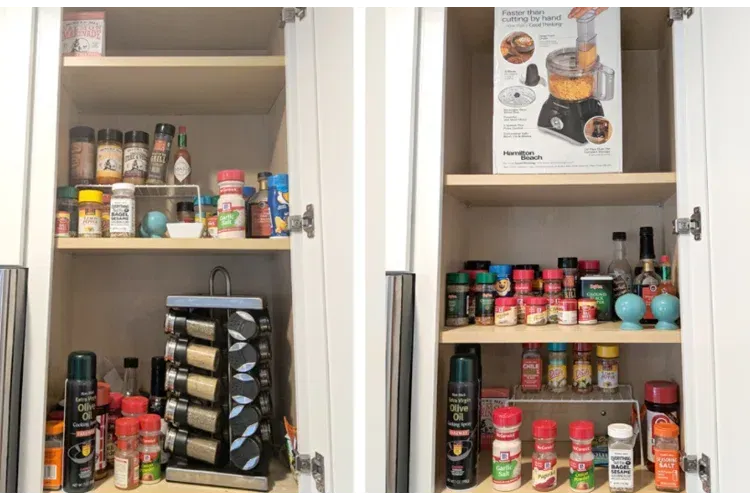
Clutter Trap #4: Storage That’s Too Hidden or Too Deep
Many Kingston homes — especially older ones — have storage that hides items instead of supporting them. Deep cupboards, awkward closets, and hard-to-reach shelves allow clutter to disappear and multiply.
This leads to:
Forgotten items
Duplicate purchases
Overstuffed storage
Anxiety when opening cupboards
A sense of losing control
How I Fix It
I focus on visibility.
That means:
Reducing how much is stored in deep spaces
Grouping items so categories are obvious
Using shallow containers inside deep storage
Storing frequently used items where they’re visible
Making it easy to see what exists at a glance
When people can see what they own, clutter stops growing.
Clutter Trap #5: Rooms With No Clear Purpose
One of the most damaging clutter traps I see in Kingston homes is rooms without a defined role.
These spaces often become:
Catch-all rooms
Overflow storage
Mixed-use chaos zones
Places people avoid
When a room doesn’t have a purpose, anything feels allowed — and clutter thrives.
How I Fix It
I help homeowners decide:
What this room is primarily for
What does not belong here
How storage should support that purpose
Once a room has a clear identity, clutter no longer feels welcome there.
Clutter Trap #6: Paper With No Flow or System
Paper clutter is one of the most stressful clutter types because it feels urgent, important, and endless.
In Kingston homes, paper piles form because:
Mail has no processing routine
Documents live in multiple rooms
School papers pile up
Bills get mixed with random paperwork
Paper clutter creates mental overload even when physical clutter is minimal.
How I Fix It
I create a simple paper flow:
One intake spot
One action area
One archive location
One discard system
No complex filing. No over-sorting. Just clarity.
When paper has a clear path, piles disappear.
Clutter Trap #7: Emotional “Just in Case” Items
Many Kingston homeowners hold onto items “just in case,” even when they don’t use or need them anymore.
These items often represent:
Past versions of life
Guilt
Fear of regret
Emotional attachment
A sense of responsibility
This trap creates storage overload and decision paralysis.
How I Fix It
I slow the process down and reframe decisions.
I ask:
Does this support your life now?
Would you choose this again today?
Is this serving you — or weighing you down?
We focus on clarity, not pressure. When people understand why they’re keeping something, they can decide with confidence.
Clutter Trap #8: Systems That Only One Person Understands
Organization fails when only one person knows how the system works.
In Kingston family homes, this leads to:
One person doing all the organizing
Frustration and resentment
Systems breaking down quickly
Clutter returning
How I Fix It
I build systems that:
Are simple
Are intuitive
Can be used by everyone
Don’t rely on perfection
If a system requires explanation, it’s too complicated.
Clutter Trap #9: Too Many Categories and Containers
People often think better organization means more bins, more labels, and more categories. In reality, this creates confusion.
Too many categories cause:
Decision fatigue
Slower cleanup
Misplaced items
Abandoned systems
How I Fix It
I simplify.
Fewer categories. Broader groupings. Clear purpose.
Simple systems last longer because they’re easier to maintain.
Clutter Trap #10: No Maintenance Plan After Decluttering
Decluttering without maintenance is like cleaning without boundaries — it won’t last.
Many Kingston homeowners declutter once, then feel discouraged when clutter returns.
How I Fix It
I teach gentle, realistic maintenance:
Short daily resets
Weekly check-ins
Flexible routines
Clear limits on incoming items
Maintenance shouldn’t feel like punishment. It should feel supportive.
Why These Fixes Work So Well in Kingston Homes
Kingston homes are diverse, layered, and lived in. They often carry years of belongings, memories, and evolving routines.
These fixes work because they:
Respect real life
Reduce effort
Eliminate guilt
Support habits instead of fighting them
Focus on prevention, not perfection
Once the trap is removed, clutter stops forming.
Final Thoughts: Clutter Is a System Problem, Not a Personal One
Clutter doesn’t mean you’re failing. It means something in the system isn’t working anymore.
When clutter traps are identified and fixed, homes naturally become calmer, easier to maintain, and more supportive.
Helping Kingston homeowners escape these clutter traps isn’t about working harder — it’s about working smarter, with compassion and clarity.
And once the traps are gone, clutter finally loses its grip.