
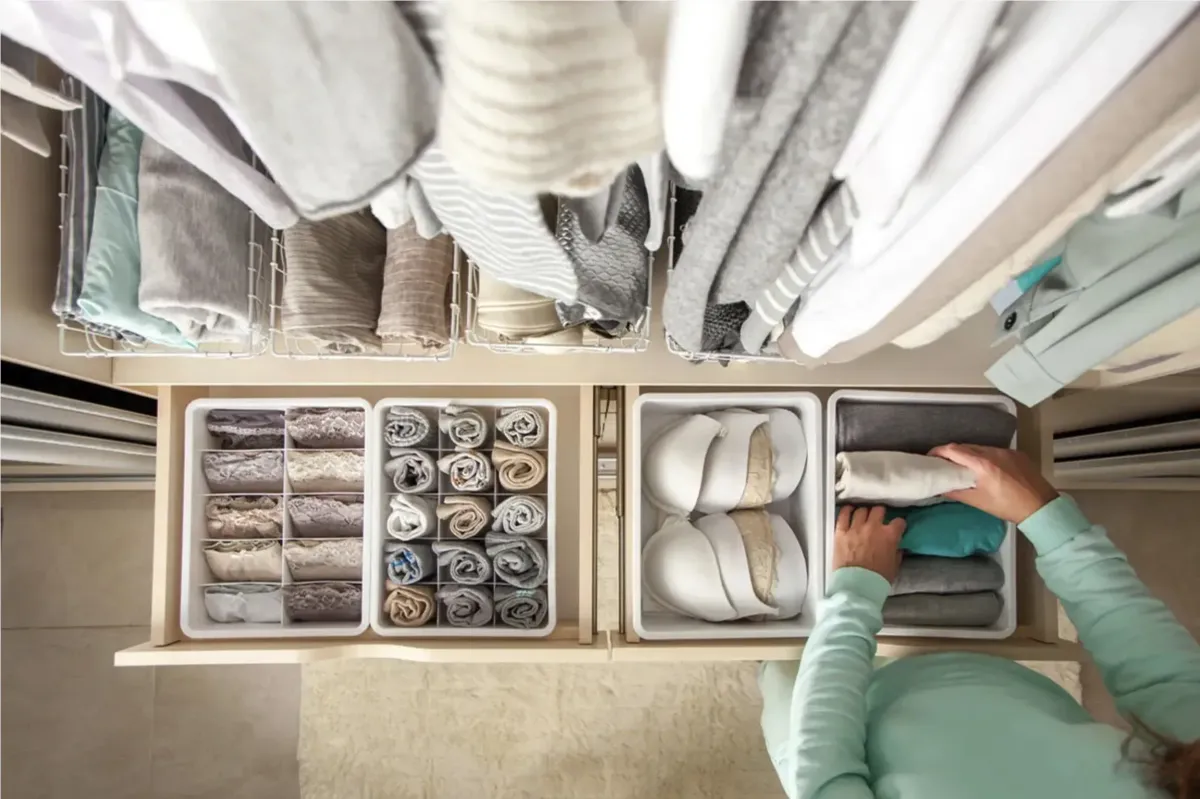
How I Help Busy Families Stay Organized When Life Gets Overwhelming
One of the biggest truths I’ve learned in my work is this: families don’t fall behind because they’re disorganized — they fall behind because life is demanding. Between work, school schedules, sports, errands, appointments, meals, cleaning, and everything else that fills a day, the pressure builds quickly. And when life gets overwhelming, clutter naturally follows.
I’ve worked with countless busy families across Kingston and Amherstview, and nearly every one of them starts with the same apology:
“I’m sorry the house looks like this.”
“I feel like I can’t keep up.”
“I don’t know how other families do it.”
“I clean, and two days later it’s back to chaos.”
But the truth is: there is nothing to apologize for. Life today moves fast, and homes are expected to keep up with demanding routines, unpredictable schedules, and rapid transitions. Staying organized isn’t about being perfect — it’s about building supportive systems that work with your life, not against it.
Today, I want to take you inside my full method for helping busy families stay organized when everything feels overwhelming. This is the real, behind-the-scenes look at how I create calm, functional spaces that help families breathe again, find what they need again, and feel in control again — even when life is chaotic.
1. Understanding the Family’s Real Life — Not the “Perfect Home” Fantasy
Before I reorganize a single drawer or touch a single bin, I spend time learning how the family truly lives. Because staying organized has nothing to do with pretty containers or magazine-style rooms — and everything to do with supporting real daily routines.
So I start with questions like:
“What part of the day feels the most chaotic?”
“Where do things pile up first?”
“Who needs what, and when?”
“What are the biggest frustrations right now?”
“What would make your mornings easier?”
“What helps you feel calm at home?”
“What systems have worked for you in the past?”
This tells me what matters most to the family — not what looks good on Instagram, not what some organizer says “should” work, but what actually supports their life.
Because organization should serve the family, not impress anyone else.
2. Identifying the “Overwhelm Zones” — The Spaces That Set the Tone
Every home has overwhelm zones — the areas that collect clutter the fastest and drain mental energy the most. In Kingston and Amherstview homes, I often see:
the kitchen counter
the front entry or mudroom
kids’ bedrooms
the laundry area
the dining table
a catch-all room used for everything
the top of the washing machine
the space near the stairs
the hallway closet
These zones matter far more than people realize. When they’re cluttered, the entire home feels cluttered. When they’re functional, the home feels manageable again.
So I always begin by stabilizing these high-impact areas first.
This instantly reduces stress and creates breathing room.
Families often tell me:
“I didn’t realize one corner could affect everything.”
But it does — and fixing it is transformational.
3. Simplifying Daily Routines to Reduce Stress Instead of Adding to It
One of the biggest misconceptions is that organization requires complicated routines.
Busy families don’t have time for complicated — they need systems that take seconds.
So I design organization around:
✔ Morning routines
Getting kids ready, packing bags, finding shoes, breakfast prep.
✔ Evening routines
Meal cleanup, homework spaces, bedtime flow, next-day prep.
✔ Storage habits
Where items naturally land when people walk into the house.
✔ Energy levels
Most families don’t want to declutter after a long day — systems must work automatically.
✔ Time limitations
A system that takes 20 minutes to maintain will fail.
A system that takes 20 seconds will survive anything.
When organization fits into life, overwhelm decreases dramatically.
4. Creating “Drop Zones” That Prevent Clutter Before It Starts
In a busy home, clutter forms because items don’t have a home — so they land wherever someone drops them. That’s why drop zones are essential.
Drop zones are intentional spaces where families place high-traffic items such as:
backpacks
homework folders
keys
mail
water bottles
school forms
purses
reusable bags
sports gear
By creating designated landing areas, I eliminate one of the biggest causes of clutter.
Some drop zones I create include:
a simple tray for keys and mail
a hook for each child’s backpack
a bin for shoes that don’t need to be put away immediately
a folder for school papers
a charging station for electronics
a bin for “things going back out of the house”
These systems don’t look fancy — they look functional.
And functionality is what busy families need most.
5. Designing Kid-Friendly Systems That Children Can Maintain
A home stays organized only if everyone in the house can manage the system — including the kids.
One of the biggest mistakes families make is creating storage that only adults can use. If kids can’t reach, see, or understand the system, the clutter returns instantly.
So I design systems with children in mind:
✔ Open bins instead of tricky lids
Perfect for toys, stuffed animals, books, crafts.
✔ Low-level hooks
Kids can hang their own jackets, backpacks, and hats.
✔ Visual labels
Pictures help younger children know exactly where things belong.
✔ Simple categories
“School,” “Toys,” “Art,” “Clothes,” “Sports” — nothing complex.
✔ 5-minute cleanup routines
Organization should feel fast and achievable.
When kids can help, the entire family feels less overwhelmed.
6. Creating Systems That “Reset Themselves” Without Much Effort
This is one of the most important principles in my work with busy families:
a system must be self-maintaining.
That means:
You shouldn’t have to think about it.
You shouldn’t need extra steps.
You shouldn’t need to reorganize constantly.
You shouldn’t feel guilty when life gets busy.
Some examples of self-maintaining systems include:
✔ The “one-minute surface reset”
Simple spots where stray items can be cleared quickly.
✔ Laundry systems that match your actual lifestyle
Some families thrive with a weekly laundry day.
Others need daily micro-loads.
The system must fit the rhythm.
✔ Kitchen zones that match cooking habits
If snacks are far from where kids actually grab them, chaos returns.
✔ Bathroom systems that remove decision-making
A bin for hair tools.
A bin for skincare.
A bin for extras.
Done.
✔ Paper flow systems
Mail should go into ONE place — not five.
By designing systems that reduce decision fatigue, the home stays organized even on the busiest weeks.
7. Reducing Visual Noise — The Secret to Immediate Calm
Busy families often underestimate how much visual noise affects their stress levels.
Visual noise includes:
cluttered surfaces
overstuffed shelves
too many small items
scattered décor
mismatched storage
paper piles
items that don’t belong
When I help families in Kingston or Amherstview calm their space, I start by reducing visual noise:
✔ Clear surfaces
Not perfectly empty — just intentional.
✔ Grouping items together
So the eye only has one place to look.
✔ Using consistent containers
Visual unity creates calm instantly.
✔ Removing items from sight
Especially things that are used rarely.
Families almost always say:
“It feels peaceful in here and we barely did anything.”
That’s the power of visual calm.
8. Reorganizing Storage to Match Real Routines (Not Idealized Ones)
One of the biggest reasons families feel overwhelmed is because their storage doesn’t match how they actually use their home.
So I always reorganize storage based on:
✔ Frequency of use
Everyday items must be reachable effortlessly.
✔ Family traffic patterns
Where do people naturally put things?
✔ Functional categories
Too many categories = confusion.
Simple categories = success.
✔ Realistic expectations
If a system takes too much time, it won’t last.
✔ Room purpose
A room’s organization should reflect what the family actually does in the room.
Sometimes small changes — like moving lunch containers closer to the fridge, or placing kids’ shoes near the door — completely transform the pacing of the day.
9. Teaching Families How to Maintain the Systems in the Simplest Way Possible
The goal is never perfection.
The goal is long-term ease.
Before I finish a project, I always walk the family through:
✔ How to maintain the systems
Quick resets that fit busy schedules.
✔ How to spot clutter early
Prevention is easier than cleanup.
✔ How to adjust systems as routines change
Families evolve — so must their home.
✔ How to use a “clutter basket”
A fast way to collect items that need sorting later.
✔ How to create a weekly 10-minute reset
Small habits create big results.
I never expect families to maintain a showroom-level home — that’s unrealistic.
But a calm, functional, manageable home?
That’s absolutely achievable.
10. The Emotional Relief Busy Families Experience After the Transformation
When the home finally feels organized again, families often feel a massive emotional shift:
“I can breathe again.”
“I finally feel in control.”
“The house feels lighter.”
“The mornings run smoother.”
“I feel calmer.”
“This already changed so much.”
Organization doesn’t just improve a home —
it improves energy, relationships, routines, and confidence.
Busy families deserve ease.
Busy families deserve support.
Busy families deserve systems that hold them up, not systems they struggle to maintain.
And helping them reach that point is one of the best parts of what I do.
Final Thoughts: Organization Isn’t About Perfection — It’s About Peace
Busy families aren’t disorganized because they don’t care.
They’re disorganized because they’re human — juggling too much, moving too fast, and doing their best every single day.
My role isn’t to judge.
My role is to help create a home that supports the family during chaos, stress, transitions, growth, and uncertainty.
A home should feel like a soft place to land.
A space that restores energy — not drains it.
A place where systems carry the load when life gets heavy.
And that’s what a well-designed organization method provides.
Helping busy families in Kingston and Amherstview stay organized is more than work…
it’s meaningful, impactful, life-improving support.