
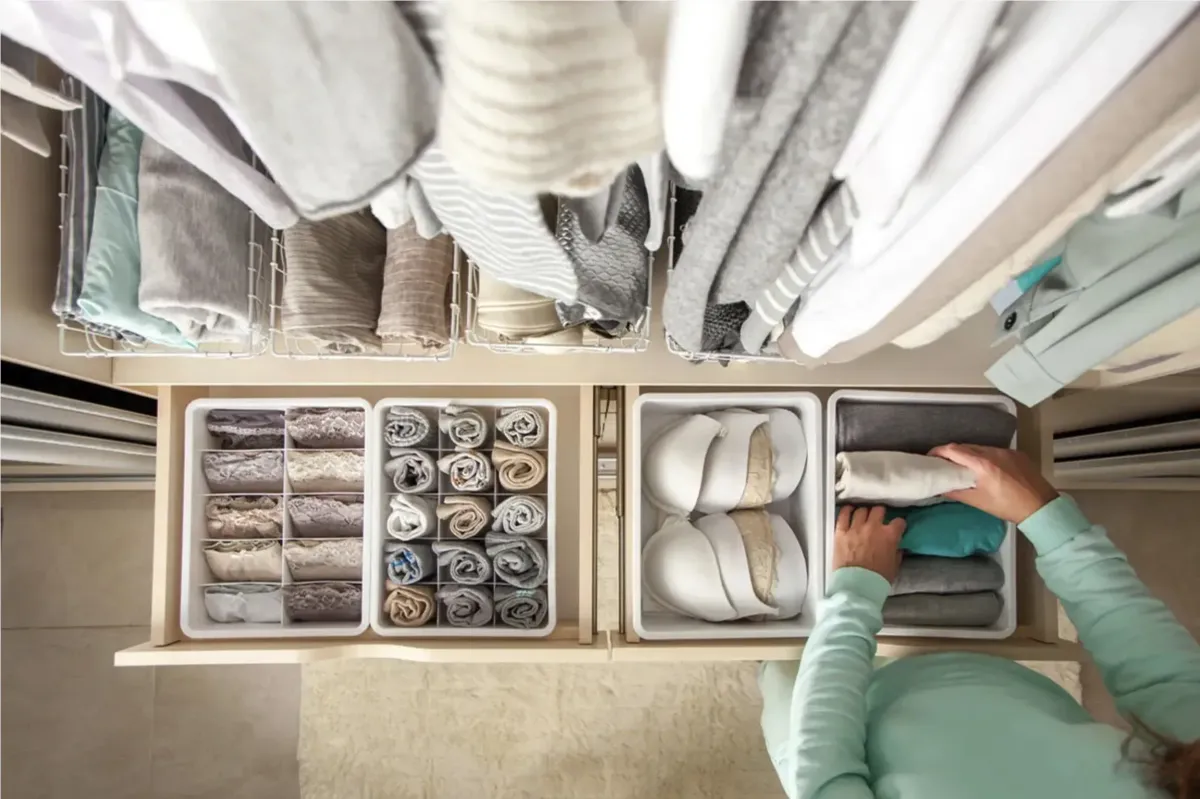
How I Create Closet Organizing Systems That Actually Work in Kingston Homes
Closets are one of the most frustrating spaces in the home for many Kingston homeowners. People often assume closets should be simple — just hang things up, fold items neatly, close the door, and everything should stay organized.
But in reality, closets are where clutter hides, builds, and quietly becomes overwhelming over time.
I hear it constantly from homeowners in Kingston:
“My closet stresses me out every morning.”
“No matter how many times I organize it, it never stays that way.”
“I can’t find anything in there.”
“It feels packed, but I still feel like I have nothing to wear.”
“I avoid dealing with it because it’s too overwhelming.”
Closets are not just storage spaces. They are high-use, high-decision areas that affect daily routines more than people realize.
Over the years, I’ve developed a closet organizing approach that actually works in Kingston homes — not because it looks perfect, but because it’s functional, realistic, and easy to maintain.
In this blog, I’m going to walk through exactly how I create closet organizing systems that last, why most closet organization fails, and what makes a closet truly work for real life.
Why Closets in Kingston Homes Become So Overwhelming
Closets are rarely designed with modern life in mind. Many Kingston homes have closets that were built decades ago, with limited shelving, awkward layouts, or minimal storage flexibility.
Closet overwhelm often comes from:
Too many items competing for limited space
Storage that doesn’t match how people actually dress
Clothing kept out of guilt or obligation
Seasonal items mixed with daily essentials
Categories that are unclear or inconsistent
Systems that are too complicated to maintain
Closets become stressful when they stop supporting routines and start creating friction.
A functional closet should make daily life easier — not harder.
The Biggest Closet Organizing Mistake: Organizing Without Decluttering
One of the most common mistakes I see is homeowners trying to organize closets without decluttering first.
They buy bins, add hangers, install shelves — but the closet still feels packed.
That’s because organization cannot fix excess volume.
If there are too many items for the space, the closet will always feel chaotic.
That’s why my first step is always decluttering with clarity, not rushing into storage solutions.
Step One: I Start With What the Homeowner Actually Uses
When I begin organizing a closet in a Kingston home, I focus on the clothing and items that support daily life right now.
I ask questions like:
What do you wear weekly?
What do you reach for first?
What items feel essential?
What items are just taking up space?
This shifts the closet from being a storage unit for everything you’ve ever owned into a functional space for your current life.
Closets work best when they reflect the present, not the past.
Step Two: I Separate Closet Contents Into Simple Categories
Closets feel overwhelming when everything is mixed together.
So I break items into broad, clear categories such as:
Everyday clothing
Special occasion items
Seasonal clothing
Shoes
Accessories
Outerwear
Household storage items
The goal is simplicity, not perfection.
Too many categories create confusion. Broad categories create ease.
Once everything is grouped, the closet immediately feels more understandable.
Step Three: I Remove What No Longer Serves the Homeowner
Closet clutter often comes from items people keep for emotional reasons rather than practical ones.
Common examples include:
Clothing that no longer fits
Items kept “just in case”
Pieces tied to past life stages
Clothes kept out of guilt because they were expensive
Items that don’t feel like the person anymore
I guide homeowners through gentle decision-making:
Would you choose this again today?
Does this support your life right now?
Does this feel good to wear?
Is this adding value or adding stress?
Decluttering is not about getting rid of everything. It’s about removing what creates friction.
When the closet holds only supportive items, organization becomes easier.
Step Four: I Organize Based on Frequency of Use
One of the most important parts of my closet systems is that they are built around daily habits.
Closets fail when items are stored in inconvenient places.
So I organize by frequency:
Daily-use items go front and center
Most worn clothing at eye level
Everyday shoes easy to reach
Frequently used accessories visible
Weekly or occasional items go slightly farther away
Dressier clothing
Backup items
Less-used shoes
Seasonal items are stored separately
Off-season coats
Summer clothing in winter
Seasonal footwear
This reduces decision fatigue and makes mornings smoother.
A closet should flow naturally with the homeowner’s routine.
Step Five: I Create Zones That Stay Consistent
Closets stay organized when zones are clear and consistent.
In Kingston homes, I create closet zones such as:
Work clothing zone
Casual clothing zone
Outerwear zone
Shoes zone
Accessories zone
Seasonal overflow zone
When zones exist, items return to the same place automatically.
Without zones, closets become random storage spaces again.
Zones create structure without effort.
Step Six: I Focus on Accessibility, Not Aesthetic Perfection
Many closet systems fail because they look good but don’t function well.
I prioritize accessibility over appearance.
That means:
Storage that is easy to reach
Clear visibility
Simple containment
Minimal steps required to put things away
If something is hard to access, it won’t be maintained.
Closets should work on busy mornings, low-energy days, and rushed routines.
That’s how systems last.
Step Seven: I Simplify Storage Tools
Closet organization doesn’t require endless products.
In fact, too many containers often create more clutter.
I use only what supports function, such as:
Matching hangers for consistency
Simple bins for categories
Shelf dividers when needed
A clear laundry flow
Minimal accessory containment
The simpler the storage, the easier the maintenance.
Closet systems should feel effortless, not complicated.
Step Eight: I Build Systems That Prevent Overflow
Closets fall apart when there are no limits.
So I build boundaries into every system.
For example:
A set number of hangers
A defined shoe space
A seasonal bin limit
A clear rule for incoming clothing
When space has limits, clutter cannot expand endlessly.
Boundaries prevent the closet from becoming overwhelmed again.
Step Nine: I Teach Maintenance That Takes Minutes
A closet system only works if it can be maintained easily.
I teach homeowners simple habits such as:
Weekly quick hanger resets
Seasonal clothing swaps
Letting go of one item when something new comes in
Keeping floors clear
Returning items to zones immediately
Closet maintenance should take minutes, not hours.
The goal is sustainability, not constant reorganization.
Step Ten: The Emotional Shift That Happens With a Functional Closet
Closets are deeply tied to daily confidence.
When a closet is chaotic, mornings feel stressful.
When a closet works, homeowners often say:
“Getting ready feels easier.”
“I feel calmer.”
“I can actually find what I need.”
“I didn’t realize how much stress this was causing.”
A functional closet is not just about storage — it’s about reducing daily friction.
That emotional relief is why closet organization matters so much.
Why These Closet Systems Work in Kingston Homes
Kingston homes often have closets that are smaller, older, or not designed for modern volume.
My approach works because it:
Reduces excess before organizing
Builds zones based on real life
Prioritizes accessibility
Creates boundaries to prevent overflow
Keeps systems simple and maintainable
Closets don’t need to be perfect.
They need to be supportive.
Final Thoughts: Closet Organization Is About Daily Ease
A closet that works is not about aesthetics. It’s about function.
When I create closet organizing systems in Kingston homes, my goal is always the same:
To make daily life easier.
To reduce stress.
To eliminate clutter traps.
To build systems that last.
A closet should support your routine, not complicate it.
And when the system is built the right way, it stays organized naturally — without constant effort.